Discover the rich history, signature dishes (Kalguksu, Mandu, Bibimguksu), and famous garlic kimchi of Myeongdong Kyoja, a Michelin Bib Gourmand selection in Seoul. This deep dive covers everything you need to know, from ordering tips to the secret behind its cult-favorite noodles. Get ready to plan your visit to this iconic Seoul culinary landmark!
Have you ever had one of those days where only a bowl of profoundly comforting, soul-warming noodle soup will do?
I know I have, and for me, and countless others across South Korea and the world, that craving leads straight to one legendary name: Myeongdong Kyoja.
It’s not just a restaurant; it’s an institution, a culinary pilgrimage point in the heart of Seoul’s bustling Myeongdong district that has been serving its signature dishes for well over five decades.
For anyone visiting Seoul, whether you’re a first-timer or a seasoned traveler, experiencing Myeongdong Kyoja is simply a non-negotiable part of the itinerary.
In this comprehensive guide, I’m going to take you on a journey through the rich, savory history and the intensely focused, yet utterly delicious, menu that has earned this place a permanent spot in the Michelin Guide’s Bib Gourmand selection.
Forget the endless searches for what to eat in Seoul—I promise, by the time we’re done, you’ll be ready to dive headfirst into a bowl of their famous Kalguksu and tackle that legendary kimchi. 😊
The Enduring Legacy: Myeongdong Kyoja’s 50+ Year History
To truly appreciate the food here, you have to understand the history, and this story begins back in 1966 when the business started in Myeongdong. It became widely known for its knife-cut noodles (kalguksu) and built a loyal following.
As popularity grew and imitators appeared, the owners made a pivotal decision in 1978 to adopt the name Myeongdong Kyoja to distinguish their brand and quality more clearly.
The new name incorporated the word ‘Kyoja’ (another term for mandu or dumplings), highlighting that their steamed dumplings were equally important and skillfully made, even though the Kalguksu remained the primary star.
This change solidified their identity, and the main branch near Myeongdong Cathedral has since become a culinary beacon, attracting diners from Korea and around the world.
The fact that they have maintained their standard for over half a century, surviving countless culinary trends and economic shifts, is a testament to the sheer quality and appeal of their recipe.
Recognition in the Michelin Bib Gourmand confirms what Korean food lovers have long appreciated—excellent food at great value.
💡 Fun Fact: Name Change
The brand became widely known for kalguksu early on.
The switch to Myeongdong Kyoja wasn’t a sudden change in food focus, but a strategic move to stand out from imitators and emphasize their handmade mandu.
Deconstructing the Masterpiece: The Four Signature Dishes
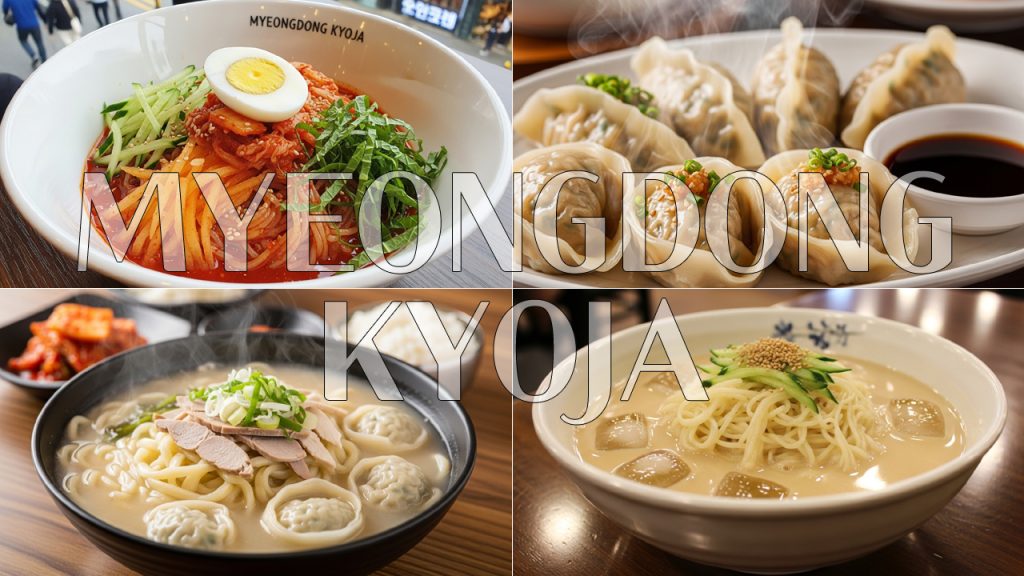
The beauty of Myeongdong Kyoja lies in its incredible focus—they offer a menu so simple it’s brilliant, featuring only three regular dishes and one seasonal item.
This narrow focus allows them to pour all their expertise into perfecting every single component, resulting in a dining experience that is both efficient and deeply satisfying.
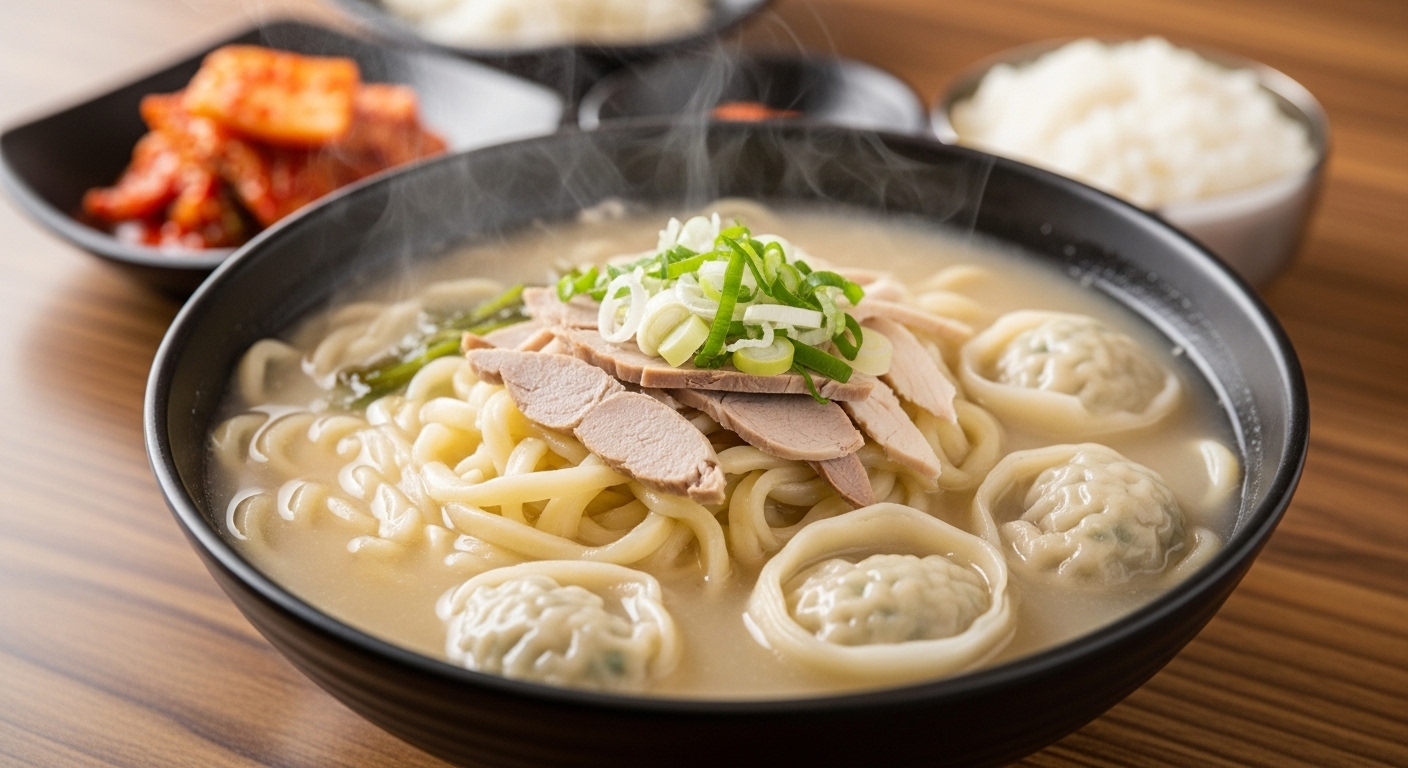
1. The Legendary Kalguksu (Knife-Cut Noodle Soup)
This is the undeniable main event, the dish that put them on the map and the reason most people brave the always-present line.
At first glance, it looks like many other Korean noodle soups, but the flavor profile is what sets it apart.
The broth is the real secret here: compared with the lighter, clearer broths seen elsewhere, Myeongdong Kyoja’s version is rich, savory, and slightly cloudy.
It’s a well-developed chicken-based broth that coats the noodles comfortably and delivers deep umami in every slurp.
The noodles are handmade and knife-cut (kal-guksu), offering a balance of soft tenderness and satisfying chew.
The soup is completed with seasoned minced meat, and thinly sliced zucchini and leeks, creating a complete and balanced bowl.
🔍 Case Study: The Broth’s Character
While recipes are not publicly disclosed, many diners note the broth’s body and savoriness come from long, steady simmering of chicken with aromatics and vegetables—yielding a fuller texture than a typical light chicken soup.
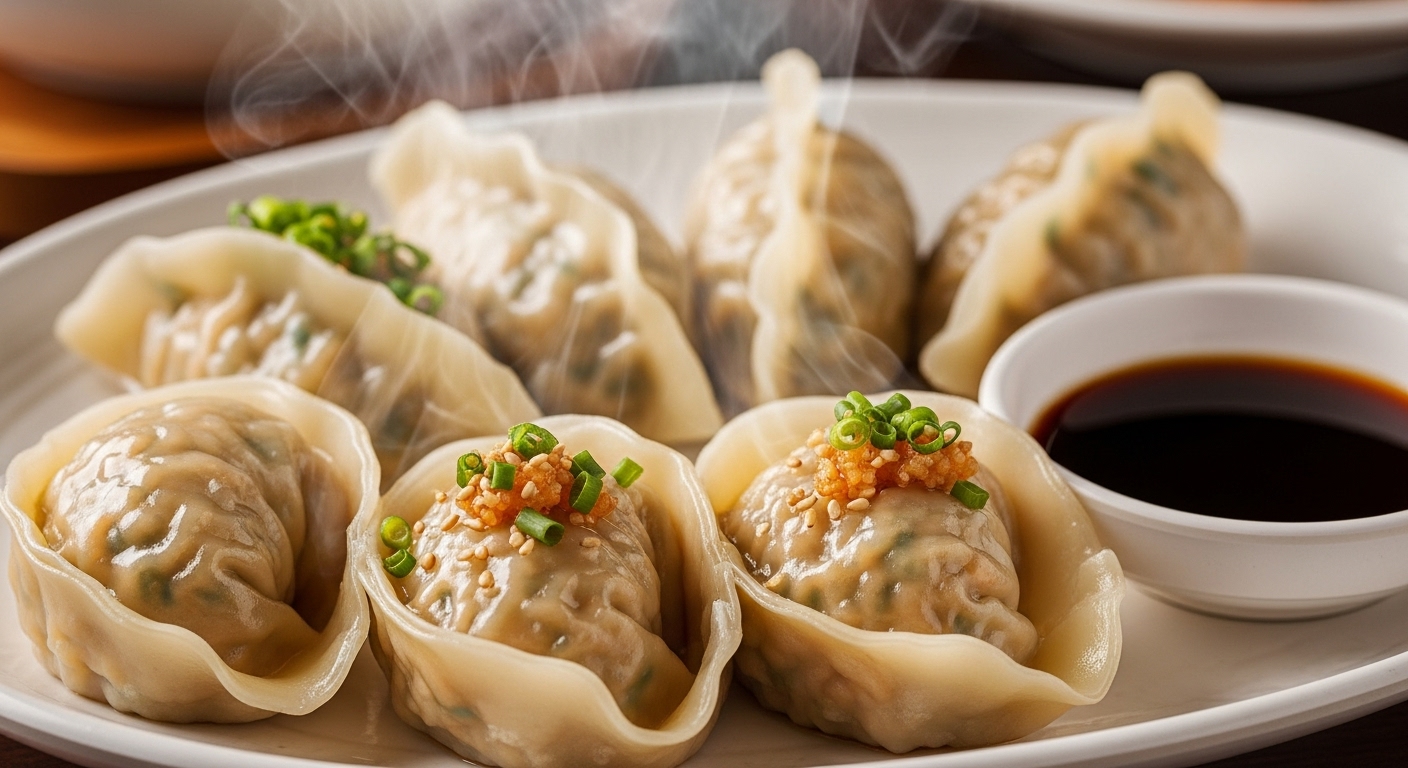
2. Kyoja Mandu (Steamed Dumplings)
As the name suggests, the mandu are much more than a side dish; they are a signature in their own right.
Served steamed, these dumplings are generously filled, with a thin wrapper that lets the savory filling shine.
The filling features seasoned pork with finely chopped vegetables and leeks—juicy and balanced.
It pairs perfectly with the Kalguksu broth, which is why some diners enjoy the two together.
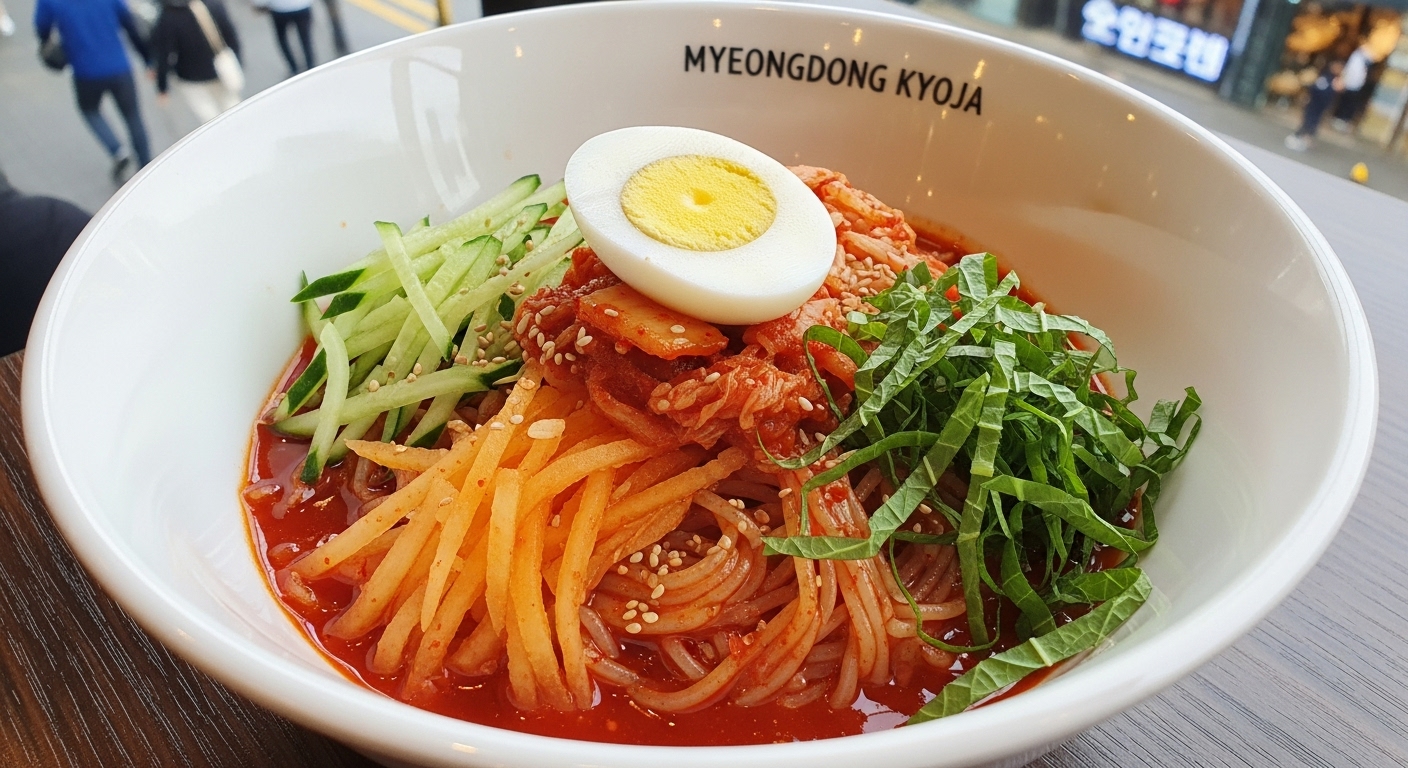
3. Bibimguksu (Spicy Mixed Noodles)
If you prefer your noodles cold with a bold kick, Bibimguksu is the move.
Firm, chewy wheat noodles are coated in a thick, vibrant sauce that balances heat, tang, and nuttiness (with sesame oil aromas).
It’s served cold and often topped with crisp cucumber, delivering contrast and refreshment.
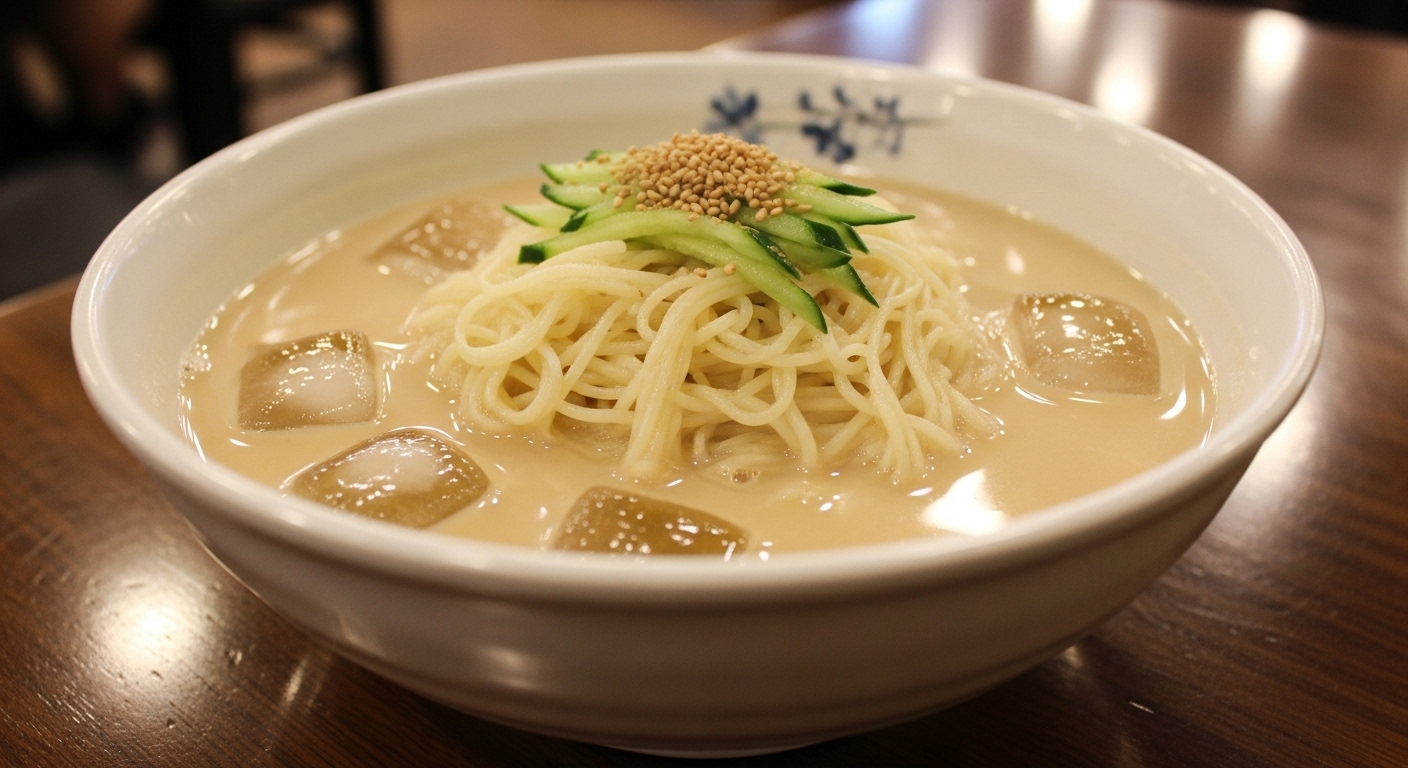
4. Kongguksu (Cold Soybean Noodle Soup) – A Seasonal Delight
Available only during the warmer months (timing varies by season; check in-store), Kongguksu is a quintessential Korean summer dish.
The noodles are served in a thick, creamy, ice-cold soup made from finely ground soybeans.
Subtle, nutty, and surprisingly filling, it’s a clean and refreshing option—popular among those looking for a lighter flavor profile in hot weather.
Menu Snapshot and Flavor Profile Comparison
| Dish Name | Type | Key Flavor Profile | Availability |
|---|---|---|---|
| Kalguksu | Hot Noodle Soup | Rich, Savory Chicken Broth | Year-Round |
| Mandu | Steamed Dumplings | Juicy Pork & Vegetable Filling | Year-Round |
| Bibimguksu | Cold Mixed Noodles | Spicy, Tangy, Nutty | Year-Round |
| Kongguksu | Cold Noodle Soup | Creamy, Subtle Soybean | Seasonal (summer; check in-store) |
The Secret Weapon: The Infamous Garlic Kimchi
While the noodles might be the star of the show, the side dish is the true cult favorite, and I promise you, you’ll never forget it.
I’m talking about the legendary, generously refillable, garlic-forward kimchi that sits on every table.
This is not your grandma’s mild, fermented kimchi; it’s fiery and potent with fresh garlic that lingers—in the best way possible.
That intensity creates the perfect contrast to the savory richness of the Kalguksu broth.
The sharp, spicy edge of the kimchi cuts through the broth’s body, making each bite a satisfying push and pull of flavors.
⚠️ Garlic Warning!
The kimchi here is known for a high raw-garlic punch.
If you have a sensitive stomach or back-to-back meetings, pace yourself (or keep mints handy).
Still—a must-try part of the experience.
Visiting the main branch is an experience in itself—usually busy, efficient, and well-organized to handle constant flow.
Here’s what you need to know to make your visit seamless and stress-free.
The Swift and Modern Service System
Turnover is remarkably fast, often across multiple floors.
You typically pay when ordering, which speeds things up.
Service is brisk and efficient—this is a place to enjoy great food promptly and get back to exploring Myeongdong.
The Refill Policy
A nice perk here: when you order Kalguksu, a free noodle refill (sari) and/or one serving of rice (gonggibap) may be available.
Policies can vary by time and crowding—ask staff on the day.
The garlic kimchi is also refilled upon request—another reason people leave fully satisfied.
Pro-Tips for a Perfect Visit (A Quick Checklist)
- Check the Queue: Lines move fast; sometimes there are separate flows for small vs. larger parties.
- Seasonal Awareness: In summer, try Kongguksu (availability varies by season; check in-store). Otherwise, the Kalguksu, Mandu, and Bibimguksu are staples year-round.
- Go Off-Peak: Aim for early lunch (~10:30 AM) or late afternoon (~3:00 PM) to minimize wait.
- Kimchi Moderation: Start small—it’s spicier and more garlicky than typical.
The main branch is right in the heart of the Myeongdong shopping district, near Myeongdong Cathedral—easy to reach after sightseeing.
Official address: 29, Myeongdong 10-gil, Jung-gu, Seoul.
Take Seoul Subway Line 4 to Myeongdong Station, use Exit 8, then walk about 180 meters.
To make things even easier, use the button below to open the Google Maps entry for the main branch in your navigation app.
Beyond the Bowl: Your Kalguksu Customization Checklist
To make your dining experience even more tailored and fun, I’ve put together a simple, interactive checklist.
You can use this to pre-plan your perfect bowl or just to track your choices for a friendly debate with your dining companions!
Myeongdong Kyoja Order Builder
Your Kyoja Strategy Summary:
*Select your options above to generate your custom dining plan.*
Final Verdict and Encouragement
Myeongdong Kyoja is more than just a quick meal; it’s a taste of Seoul’s culinary history, a place where decades of dedication have resulted in a handful of perfectly executed dishes.
Whether you fall in love with the rich, satisfying Kalguksu broth, the delicate and juicy Mandu, or the kick of Bibimguksu, your visit will be a memorable part of your Seoul adventure.
Don’t let the lines intimidate you; the process is fast, the system is efficient, and the reward is a bowl of noodles many consider among the best in the country.
Embrace the garlic, enjoy the organized bustle, and savor every last drop.
Have you been to Myeongdong Kyoja?
Share your kimchi challenge stories or your favorite dish in the comments! 🍜
Visual Summary: Myeongdong Kyoja at a Glance
🍜 Signature Dish
Kalguksu (Rich, Savory Chicken Broth)
⭐ Recognition
Michelin Bib Gourmand (Excellent Value)
📍 Best Known For
Garlicky Kimchi & Helpful Refill Policy