Have you ever searched for that one restaurant, the kind of place that holds the very soul and history of a city within its walls?
I certainly have, and in Seoul, that search inevitably leads you to a few legendary names.
The feeling of walking into a place where generations of Koreans have shared meals, laughter, and momentous occasions is truly something special.
It’s not just about the food; it’s about the ambiance, the legacy, and the taste of history itself.
Today, I want to take you on a journey to one of Seoul’s most cherished culinary treasures, a place known simply as Joseonok (조선옥) in the bustling yet nostalgic district of Euljiro.
This isn’t just another barbecue joint; it is a venerable institution that has been serving up its iconic dishes since before the Korean War, which is an incredible testament to its enduring quality and appeal.
For many years, the delicious and unique flavor of their signature seasoned beef ribs has been a comforting constant in the ever-changing landscape of Seoul’s dining scene.
The name “Joseonok” conjures up images of old Seoul, a simpler time, and a commitment to flavor that modern fast-food culture simply cannot replicate.
If you’re anything like me, you might sometimes feel overwhelmed by the sheer number of trendy, new spots popping up every week in the city.
Where do you go when you want something authentic, something that has truly stood the test of time?
That is the central problem this article solves: guiding you directly to a dining experience steeped in tradition.
This comprehensive guide will break down everything you need to know about Joseonok, from its incredible history to the specific, nuanced flavors of its must-try dishes.
My objective is to ensure your visit is as smooth and satisfying as possible, covering the famous Yangnyeom Sogalbi, the distinctive Spicy Beef Stew (Daegutang), and the crucial details like how to find the place and when to go.
Prepare your appetite, because you’re about to discover a true Seoul legend.
😊
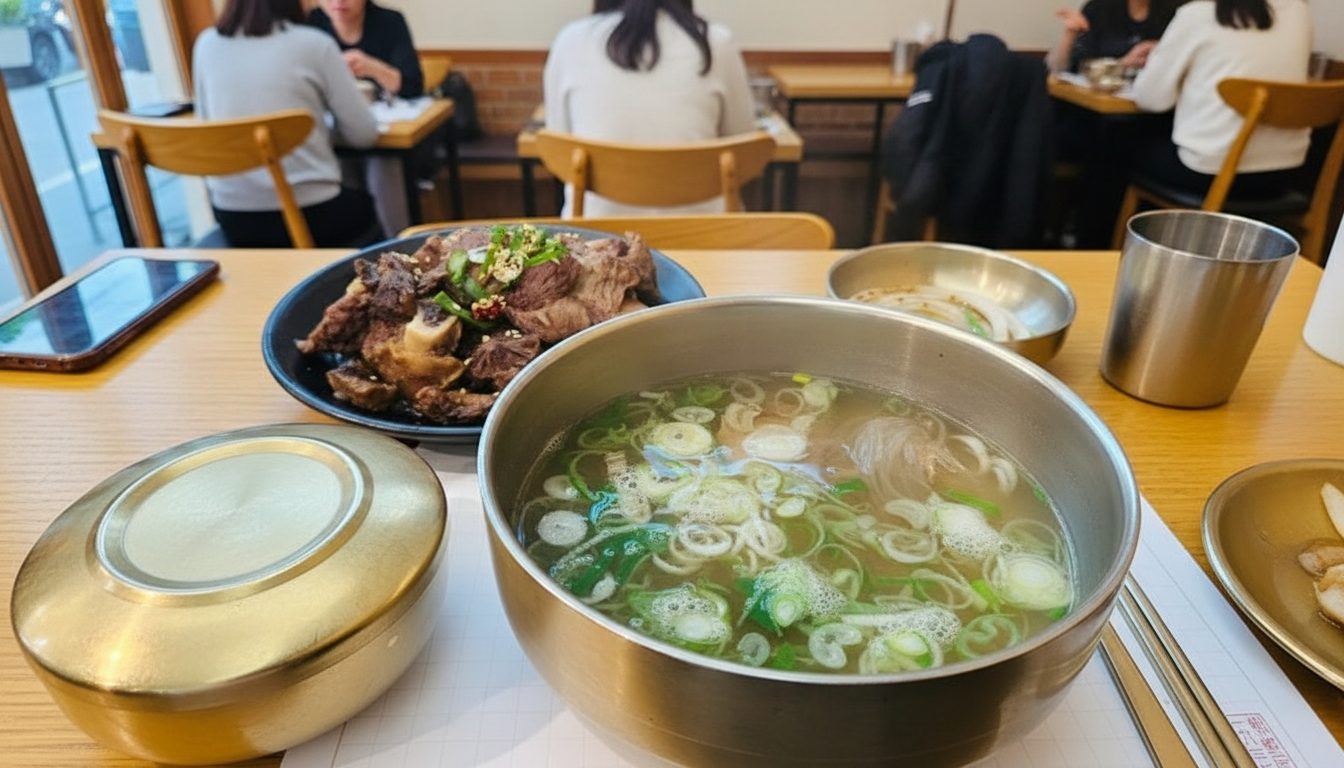
1. Joseonok’s Storied Legacy in Euljiro: A Taste of Pre-War Seoul
The history of Joseonok is perhaps as rich and flavorful as its celebrated Yangnyeom Sogalbi.
When we talk about a restaurant that opened before the Korean War, we are genuinely discussing a monumental piece of Seoul’s cultural and culinary fabric.
Think about all the political shifts, economic booms, and urban transformations that Seoul has undergone since the 1930s.
To survive all of that, and to continue serving the same dishes with the same traditional methods, is nothing short of miraculous and inspiring.
It is this enduring spirit that defines the Joseonok experience.
Given the historical ambiguity in records (some citing 1937, others 1947), the most accurate and conservative statement is that the restaurant Opened before the Korean War and is now being run by the third generation of the founding family.
This multi-generational commitment is what guarantees the consistent, high-quality taste that patrons have come to expect over the decades.
When you eat here, you are not just a customer; you are a participant in a long-running Seoul tradition.
I find it fascinating to ponder the continuity of flavor.
Imagine that the Yangnyeom Sogalbi you taste today carries the exact same essence and profile that someone enjoyed seventy or eighty years ago—that is the power of Joseonok’s legacy.
It is a true culinary time capsule, a delightful anomaly in a neighborhood constantly evolving with the trendy new hipjiro cafes and bars.
The establishment’s longevity makes it a critical part of the local history, a landmark for those who value authenticity above all else.
A True Seoul Nopo (Old Restaurant)
In Korea, the term Nopo (노포) is reserved for these truly historic dining establishments, and Joseonok embodies this term completely.
The restaurant’s venerable atmosphere, especially on the first floor, speaks volumes about its age and its deep roots in the Euljiro area.
For a period up until the mid-1970s, Joseonok was famously considered one of the Big Three restaurants in the Euljiro district.
This is not a small feat, considering Euljiro was and remains a central hub of Seoul’s commerce and culture.
Being counted among the best meant maintaining an impeccable standard of food quality and service for decades.
The other two establishments in this legendary trio were Andongjang (a famous Chinese restaurant) and Inamjang (a noted Seolleongtang, or beef bone soup, restaurant).
This historical context provides a deeper appreciation for Joseonok.
It wasn’t just a good local eatery; it was a cornerstone of the area’s entire culinary scene, a destination that rivaled the best in their respective genres.
The history is not merely a footnote;
it is the main narrative.
Every dish served is a continuation of a tradition that has been lovingly preserved and passed down through the family, a true example of culinary heritage.
I always encourage visitors to pause and take in the atmosphere before diving into their meal.
The subtle details of the restaurant, the hustle and bustle, and the slightly old-fashioned feel all contribute to the overall historical experience.
Even the modernized second floor, “The Oak,” which we’ll discuss later, pays homage to this deep history while providing a contemporary dining experience.
The foundation of Joseonok is built on its decades of commitment to its original, winning recipes.
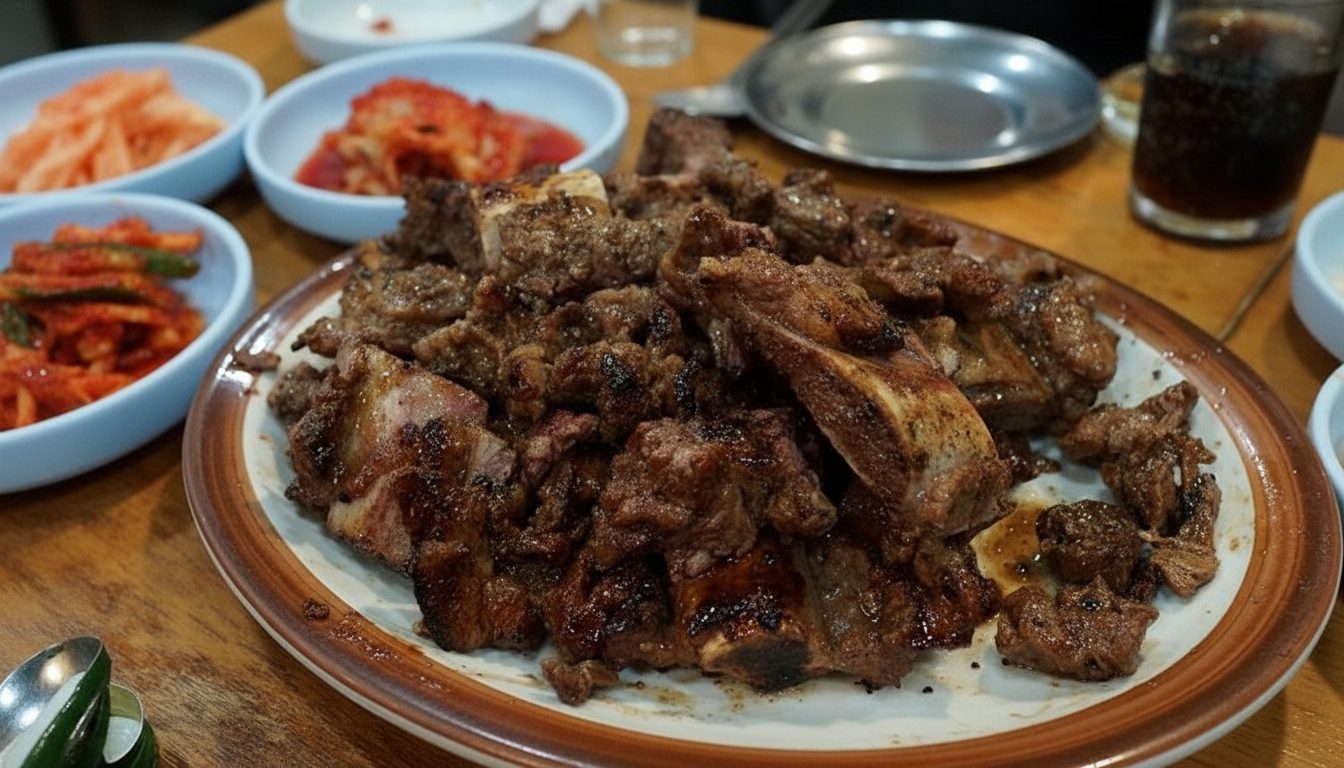
2. The Iconic Yangnyeom Sogalbi: An Euljiro Culinary Masterpiece
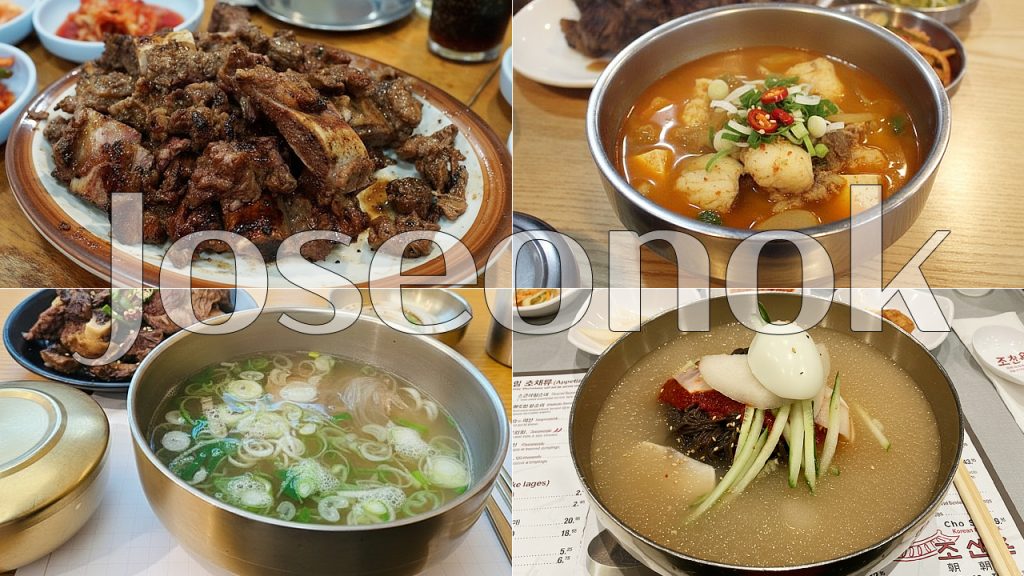
The star of the show at Joseonok, the dish that cemented its fame, is unequivocally the Yangnyeom Sogalbi, or seasoned beef short ribs.
This dish is not a modern iteration of Korean BBQ;
it is the quintessential old-school flavor that evokes a deep sense of nostalgia for many Koreans.
What truly sets Joseonok’s Galbi apart is the uncompromising adherence to a specific, detailed, and time-honored preparation method.
This meticulous process ensures that the flavor profile remains consistent with the tradition established nearly a century ago.
The secret to this incredible flavor starts with the marinade.
The beef short ribs are steeped for a full day in a special sauce.
This extended marination period is crucial, allowing the flavors to fully penetrate the meat fibers, ensuring a tender and deeply savory result.
It’s this slow, deliberate process that distinguishes true culinary craftsmanship from quick commercial preparation.
The marinade itself is a harmonious blend of fundamental Korean flavors: aged soy sauce, sesame oil, garlic, and sugar.
Notice the simplicity of the ingredients; there are no unnecessary additives or complex, trendy components.
This simplicity is the brilliance.
The sauce is described as having a sweet taste that is “not too strong,” which is key.
By keeping the marinade mild and balanced, the original, rich flavor of the high-quality beef is allowed to shine through, rather than being overpowered by the seasoning.
It’s a perfect example of how the best cooking often involves knowing when to hold back and let the natural ingredients take center stage.
The Secret to the Flavor: Charcoal Briquette Grilling
The preparation doesn’t end with the perfect marinade;
the cooking method is equally vital.
Joseonok uses an old-fashioned method, grilling the ribs over a briquette fire (Yeontan).
This method predates the widespread use of gas grilling and imparts a unique, subtle smoky flavor that is difficult to replicate with modern equipment.
Crucially, the meat is pre-grilled in the kitchen and served ready-to-eat at your table.
This pre-grilling process prevents the smoky mess that typically accompanies Korean BBQ, ensuring your clothes stay fresh.
However, some visitors note that since the meat is pre-grilled, it can, unfortunately, get cold as you slowly eat, especially during the colder months.
This is a common lament from traditional Korean BBQ lovers, who prefer the piping-hot experience of grilling right in front of them.
But for me, the trade-off for perfectly cooked, smokeless ribs is often worth the risk of a slightly cooled piece of meat.
The Ultimate Pairing: Galbi and Naengmyeon
To truly complete the Joseonok experience, order a sharing portion of the Galbi alongside your main meal, such as Naengmyeon or Daegutang, and enjoy the perfect pairing immediately.
You can wrap the seasoned ribs in the cold noodles for an enhanced flavor, which is a highly recommended pairing for the ultimate dining experience.
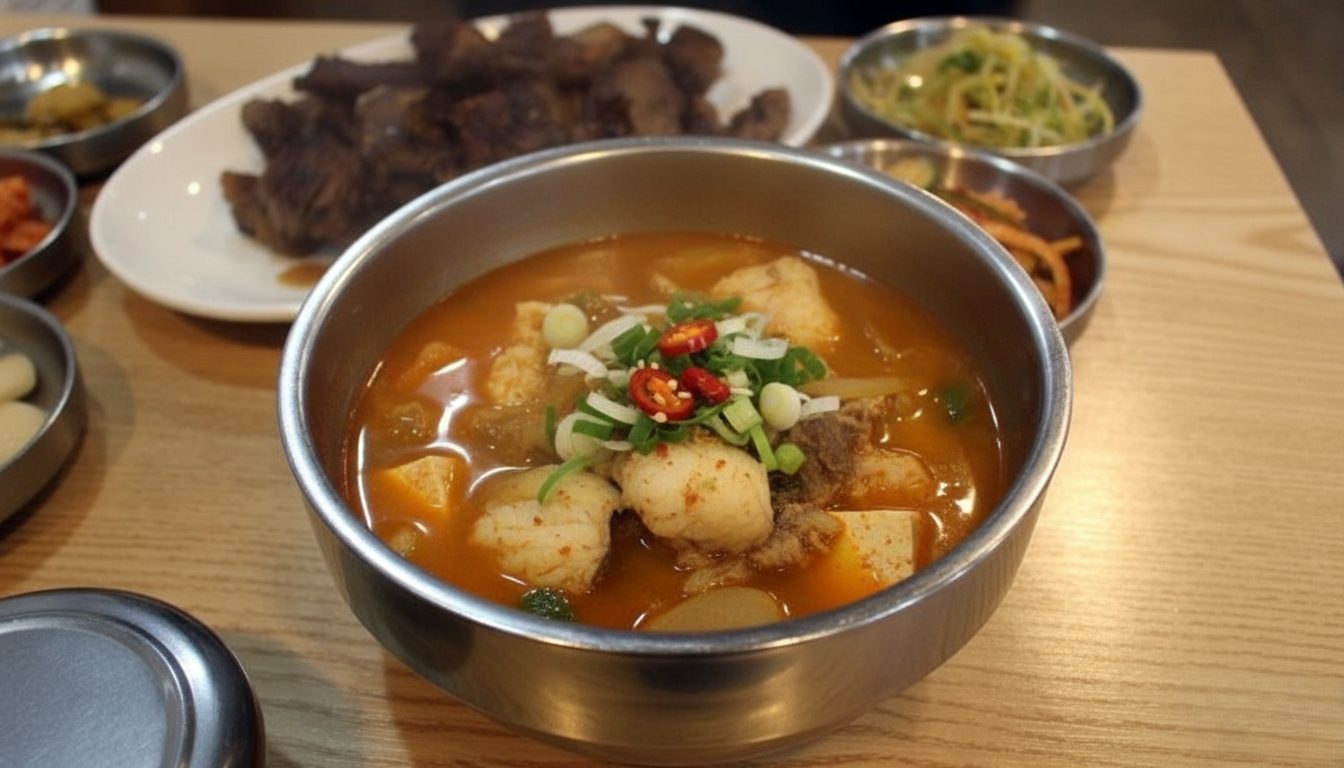
3. Beyond Galbi: The Truth About Daegutang and Other Gems
While the Yangnyeom Sogalbi receives much of the deserved attention, Joseonok’s secondary dishes, particularly the Daegutang and Pyeongyang Naengmyeon, are essential elements of the experience.
Despite the potential for misunderstanding due to the name, Joseonok’s ‘Daegutang’ is NOT Codfish Stew. It is a Spicy Beef Stew (similar to Yukgaejang or Daegu-style Yukgaejang). The soup is richly flavored with beef and copious amounts of green onion. Do not mistake it for a seafood dish; it is a hearty meat soup!
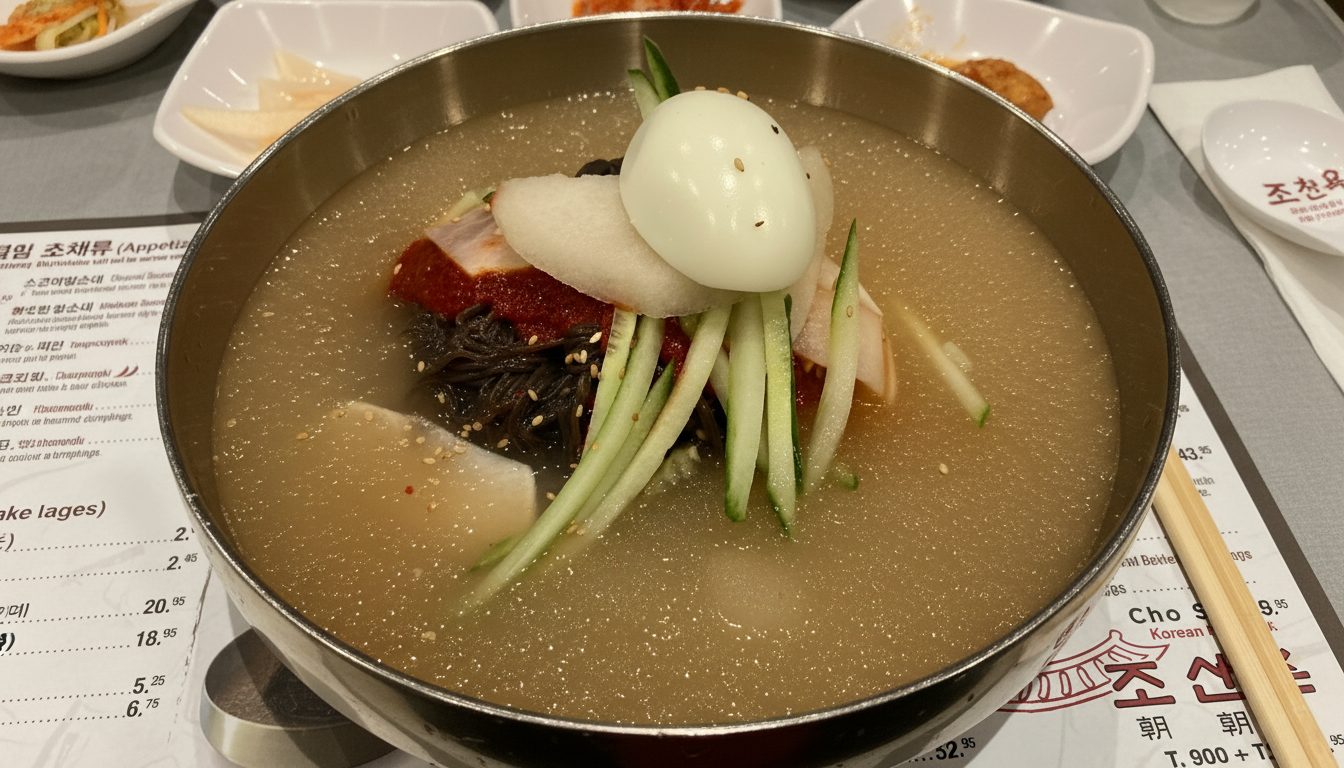
The Pyeongyang Naengmyeon, a classic pairing for the Galbi, offers a different experience.
Its buckwheat noodles and mild, savory broth provide a clean, refreshing palate cleanser that contrasts beautifully with the rich, distinct, savory flavor of the Daegutang.
It’s a perfect flavor contrast that showcases the best of Joseonok’s kitchen.
Don’t forget to ask about the side dishes that accompany the Daegutang.
I’ve heard that while some simple beef soups come with a rather plain Muguk (Radish Soup), the broth here is often described as mild (seum-seum) and soft (budeureopgo), a perfect counterpoint to the richer main dishes.
Choosing Your Naengmyeon
Joseonok provides both Mul-naengmyeon (cold noodle soup) and Bibim-naengmyeon (spicy cold mixed noodles).
The Mul-naengmyeon is the traditional choice, allowing the delicate flavor of the beef broth to shine through.
If you choose the Bibim-naengmyeon, a small piece of advice is to remove some of the hot sauce before mixing to allow you to better balance the flavors and avoid overpowering the delicate side dishes.
A good Bibim-naengmyeon is a balance of sweet, spicy, and savory, and being able to adjust the spice level is key to enjoying it to the fullest.
Rounding out the meal options is Jang-gukbap (beef soup with rice) and Galbitang (beef rib soup), both of which are excellent choices for lunch or a lighter, yet hearty, option.
One of the unique features of Joseonok is its dual dining environments.
The restaurant is split into two distinct sections, offering patrons a choice between traditional charm and contemporary comfort.
1st Floor: Nopo Charm
The ground floor of Joseonok is the heart of the restaurant’s history.
It maintains the classic, authentic Nopo atmosphere, the kind of place where you can feel the decades of service in the decor and the lively energy.
The environment can be described as “wakjakjakkol” (왁자지껄), meaning boisterous or noisy, which is typical of beloved, high-traffic traditional eateries.
If you want the true, old-school, bustling Seoul experience, the 1st floor is where you should aim to be.
2nd Floor: “The Oak” (Modern and Refined)
In contrast, the second floor, known as “The Oak,” offers a more comfortable, contemporary experience.
This space was renovated to provide a quieter, more upscale atmosphere, making it ideal for hosting guests, business dinners, or intimate gatherings.
The Oak often features a slightly more generous selection of Banchan (side dishes), which are known for including excellent vegetable-based dishes that go beyond the basic kimchi and kkakdugi.
This focus on plentiful and diverse banchan is a great bonus for those seeking a well-rounded and nutritious meal.
Table: 1st Floor vs. The Oak Comparison
| Feature | 1st Floor (Traditional) | 2nd Floor (The Oak) |
|---|---|---|
| Atmosphere | Boisterous Nopo Feel | Modern, Comfortable, Quiet |
| Banchan (Side Dishes) | Standard Selection | More Generous/Diverse Selection |
| Best For | Casual Dining, Authenticity Seekers | Hosting Guests, Business Meals, Quiet Evenings |
5. Practical Guide for Your Visit: Location, Hours, and Booking
Now that your mouth is watering, let’s cover the essential logistics to ensure your Joseonok adventure is seamless.
Knowing the operating hours, how to get there, and the best way to secure a table is paramount to a stress-free dining experience.
Getting There: Euljiro 3-ga Station Exit 6
The best way to reach Joseonok is by taking the subway to Euljiro 3(sam)-ga Station (Line 2 or 3).
The most convenient exit is Exit 6, from which the restaurant is only about an approx. 100-meter walk. Ignore any mentions of a precise 67-meter distance and follow the general guidance toward the nearby streets.
Operating Hours: Know the Break Time
Joseonok is typically open from 11:30 AM to 9:30 PM (Last Order around 9:00 PM), but they observe a crucial mid-day pause: there is a break time (Break Time) from 2:30 PM to 4:30 PM.
Most crucially, please note that Joseonok is closed every Sunday.
I’ve personally made the mistake of showing up at a famous spot on its day off, and it’s a frustration I want you to avoid!
Reservations and Takeout
Given its historic reputation and loyal following, securing a spot can be challenging, especially during peak dinner hours. While reservations are possible, it is highly recommended to call the restaurant in advance to confirm their current policy and availability. Reservations for the 2nd-floor “The Oak” area are generally more easily arranged.
Takeout (포장) is also an option for most of the main menu items, including the Yangnyeom Sogalbi, Naengmyeon, and Daegutang.
6. Pro Tips for Maximizing Your Joseonok Experience
- Prioritize Galbi and Naengmyeon. While all the food is good, the seasoned short ribs and cold noodles are the classic, essential pairing you must experience first.
- Try the Soup. If you are still hungry, or if you love soup, order the “unforgettable” Daegutang or the hearty Jang-gukbap to experience the full range of the menu. The Daegutang is particularly unique and highly acclaimed.
- Savor the Banchan. Take your time to enjoy the traditional side dishes, especially if you are seated on The Oak (2nd floor), which often provides a more generous selection. The diverse array of vegetables provides a great balance to the meat dishes.
Summary and Quick Facts
Joseonok’s Legacy
- ✅ Pre-Korean War Opening (Conservative Estimate)
- ✅ Third-Generation Family Business
- ✅ Euljiro ‘Big Three’ (Mid-70s)
Key Factual Corrections
- ⚠️ Daegutang is Spicy Beef Stew (NOT Codfish Stew)
- ⚠️ Distance is Approx. 100m (NOT 67m)
- ⚠️ Reservations: Call Ahead to Confirm Policy
Joseonok is right in the heart of the city, easily accessible from the subway, making it an ideal destination for both tourists and local Seoulites.