Venture into the back alleys of Chungmuro to find Yeong-deok Dining Restaurant, the 37-year-old originator of Seoul-style Makhoe (sliced raw fish). Uncover the secret behind their crunchy Mijuguri, the legendary “Magic Chojang,” and why this cherished ‘Nopo’ has lines out the door even at midday.
Have you ever wandered through the bustling streets of Seoul, only to feel a deep craving for something truly authentic, a dish steeped in history and local tradition?
I know I have.
Finding a restaurant that has not only stood the test of time but is also celebrated as the originator of a beloved local delicacy can feel like searching for a hidden treasure.
It’s a mission that promises a genuine taste of the city’s culinary soul, something far removed from the mainstream tourist traps.
When that craving hits, my mind immediately travels to a specific spot in the back alleys of Chungmuro, a place where the air smells of fresh fish, spicy vinegar, and decades of tradition.
If you are like me, constantly looking for that perfect blend of history, unique flavors, and an unforgettable dining experience, then you are in the right place.
Today, I want to take you on a journey to one of Seoul’s most treasured culinary landmarks: the Yeong-deok Dining Restaurant (영덕회식당).
This isn’t just another eatery; it’s a ‘Nopo’ (old restaurant) that opened its doors way back in 1988, and it has been faithfully serving the exact, original taste of Seoul-style *Makhoe* for a staggering 37 years.
My aim here is to pull back the curtain on this legendary spot, giving you all the details you need to experience its unique charm and flavors firsthand.

I. A Legacy of Flavor: The 37-Year History of Seoul’s Makhoe Originator
When we talk about traditional Korean dining, the term ‘Nopo‘ carries a weight of respect and authenticity.
Yeong-deok Dining Restaurant, established in 1988, is absolutely one of these institutions, carrying on a tradition for almost four decades now, specifically 37 years.
It’s incredible to think of how many trends and changes Seoul has witnessed since 1988, yet this restaurant has not only survived but thrived by sticking to its original, winning formula.
This long history is a testament to the quality and consistency of their food, earning them a loyal following that spans generations.
But the title that truly sets them apart is their designation as the originator of a very specific style of dish in Seoul.
They are credited as the pioneering establishment for the regional *Makhoe* dish—specifically, Mijuguri-hoe (water flatfish raw fish)—that is prepared in the style of being mixed with crisp vegetables and *Chogochujang* (spicy vinegared red pepper paste).
Before Yeong-deok Dining Restaurant popularized this style, the consumption of *Makhoe* in the city might have been different, but it was their method that became the benchmark, the gold standard for how this dish is enjoyed in Seoul.
The significance of being an originator cannot be overstated in a competitive food scene like Seoul’s.
It means that every bite you take here is not just delicious; it’s a taste of history, a direct connection to the very first time this flavor combination delighted the palates of Seoulites.
This legacy is what makes the experience so much richer than just eating a meal.
It’s participating in a culinary tradition that they, themselves, introduced to the city.
The restaurant has explicitly stated a crucial piece of information for all patrons to know.
They want to assure their customers that the authentic taste they offer is exclusive to this location.
The owners firmly state: “We do not operate any branches or franchises.”
Therefore, if you want the genuine, 37-year-old original *Makhoe*, you must visit the one and only location in Chungmuro.
The location itself adds to the charm of the experience.
You will find the restaurant tucked away in a back alley of Chungmuro.
This setting, slightly off the main thoroughfare, gives it a quiet, neighborhood feel that is often associated with true local gems.
It’s the kind of place you need to seek out, and that seeking is part of the adventure.
The fact that they have maintained their position in this local, slightly hidden spot for so long speaks volumes.
It shows that their reputation is built not on fancy marketing or a high-traffic location, but purely on the unbeatable quality of their food.
It is this commitment to tradition and quality that makes Yeong-deok Dining Restaurant a must-visit, especially for anyone wanting to truly understand the history of Seoul’s raw fish cuisine.
Every dish they serve is a reflection of their long-standing dedication to the authentic *Makhoe* tradition.

II. Decoding the Signature Dish: The Freshness and Crunch of Mijuguri Makhoe
Without a doubt, the dish that defines Yeong-deok Dining Restaurant is their Makhoe, or simply “sliced raw fish.”
It’s their representative menu item, the very reason people have been lining up outside the door for decades.
The foundation of this celebrated dish is the exceptional quality and pairing of the seafood: fresh flatfish (Mijuguri/Mul-gajami) and herring (Cheong-eo).
This combination is the core that provides the depth of flavor and texture that their regulars crave.
Let’s take a closer look at the key ingredient, Mijuguri-hoe, also known as ‘Mul-gajamihoe’ (water flatfish raw fish).
Mijuguri is a specific type of flatfish belonging to the flounder family.
What makes it so special is how it’s prepared—it’s typically eaten in the *sekkosi* style, which means it’s thinly sliced with the bone still in.
The reason this preparation works so well is because the bones of the Mijuguri are inherently soft, which transforms what might be an impediment in other fish into a delightful textural element.
When you chew on the *sekkosi*-style Mijuguri, you are treated to a distinct, audibly crunchy (‘odok-odok’) texture.
This wonderful crunch is a key part of the experience, differentiating it from softer, boneless raw fish slices.
Beyond the texture, the flavor profile of the fish itself is highly prized: it is mild and clean (‘dambak’), and crucially, it is not fishy (‘biriji anheun’).
This clean flavor profile makes it the perfect canvas for the powerful seasonings that follow.
The Mijuguri fish is primarily caught on the East Coast (Donghae) of Korea, which hints at the restaurant’s commitment to sourcing quality ingredients.
For those who appreciate seasonal dining, the information states that Mijuguri is at its peak flavor—its best season (‘jecheol’)—specifically in April.
While the restaurant is open year-round, visiting in the spring might just give you the absolute best experience of the primary ingredient.
The combination of the fresh, seasonal flatfish and the heartier herring creates a truly balanced and satisfying raw fish dish.
III. The Art of the Mix: Ingredients, Preparation, and the “Magic Chojang”
What truly elevates Yeong-deok Dining Restaurant’s *Makhoe* is not just the fish, but the brilliant array of fresh accompaniments and their legendary sauce.
The raw fish is generously mixed with a bounty of vegetables, which are sliced boldly (*sungdeong-sungdeong*) and piled high on the plate.
You can expect a huge helping of cucumber, onion, chili pepper, and sweet pear, providing layers of cool, sharp, spicy, and sweet flavors, all in one go.
To finish this magnificent pile, a generous sprinkling of sesame seeds (‘ggae sol-sol’) is added, which contributes a nutty fragrance and a subtle textural crunch.
Crucially, the dish is served with fragrant mugwort (‘ssuk-gat’), which adds an earthy, aromatic note that cuts through the richness of the *chojang* and elevates the freshness of the fish.
This thoughtful combination of ingredients ensures that every bite is a complex interplay of flavors and textures.
It is a masterclass in balancing the freshness of the sea with the vibrancy of the garden.
The Secret Sauce: “Magic Chojang”
Every great dish has a secret, and here, it’s the house-made seasoning, affectionately referred to as the ‘Magic Chojang’ (마약 초장).
This spicy vinegared red pepper paste is the magical element that binds all the ingredients together, turning a simple dish of raw fish and vegetables into an explosion of flavor.
When you manually mix the raw fish, the fresh vegetables, the mugwort, and the *chojang*, the mere sight of the dish, described as “visually stimulating to the salivary glands” (*chim-saem pok-bal*), is enough to make you hungry.
The combination of the clean Mijuguri, the crunchy vegetables, and the sweet-and-sour *chojang* makes the *Makhoe* an exceptionally popular *anju* (food that pairs well with alcohol).
It’s specifically highlighted as going perfectly with a glass of soju.
The fresh, tangy, and subtly sweet profile of the mixed *Makhoe* is the ideal counterpoint to the spirit.
It’s clear that the dish is designed not just as a meal, but as a celebratory dining experience best shared with drinks.
Your Makhoe, Your Way: Bu-meok, Jjik-meok, and Gim
The restaurant offers flexibility in how you enjoy your *Makhoe*, appealing to different preferences.
The menu listing itself recommends both ‘Bu-meok’ and ‘Jjik-meok’.
‘Bu-meok’ refers to the method where you pour or mix the sauce (in this case, the *Chojang*) directly onto the dish.
This is the traditional way to enjoy the mixed *Makhoe*, resulting in an intensely flavored, cohesive salad.
Conversely, ‘Jjik-meok’ is for those who prefer to keep their ingredients separate and dip each piece into the sauce.
This allows you to control the level of spiciness and tanginess in every bite, focusing more on the fresh flavor of the fish and vegetables.
Regardless of which method you choose, the resulting experience is described as incredibly satisfying.
Additionally, the *Makhoe* is said to taste even better when wrapped in *gim* (seaweed).
When you’re nearly done with your *Makhoe*, there’s a tradition you absolutely must follow.
Order an extra bowl of rice (‘gonggit-bap’).
Add a drizzle of sesame oil, and mix the rice directly into the remaining, intensely flavored *Makhoe* and *chojang* sauce.
This transforms the leftovers into a phenomenal Hoe-deopbap (raw fish rice bowl).
The provided information mentions that one of the best parts is when a friendly server (*imo-nim*) mixes the rice and *Makhoe* for you by hand, giving you the “true taste of handmade food” (‘sonmat’)—a truly authentic and heartwarming touch.
IV. The Full Menu: Gwamegi, Octopus, and Value-Driven Lunch Specials
While *Makhoe* is the star, the restaurant offers a focused, high-quality menu of other Eastern Sea specialties.
Their full menu, which is concise and centered around seafood that pairs well with drinks, ensures every dish is prepared with the same level of expertise and quality as their signature item.
The offerings show a dedication to seasonal favorites and long-standing Korean classics.
They keep the menu tight, which is often a sign of a place that is confident in its core competencies.
Menu and Pricing Structure
| Dish (English Name) | Korean Name | Price (KRW) | Key Description |
|---|---|---|---|
| Makhoe (Sliced Raw Fish) | 막회 | 33,000 | Fresh Flatfish and Herring combo with vegetables. Recommended ‘Bu-meok’ or ‘Jjik-meok’. |
| Gwamegi (Dried Pacific Saury/Herring) | 과메기 | 30,000 | Available year-round, thanks to vacuum preservation. |
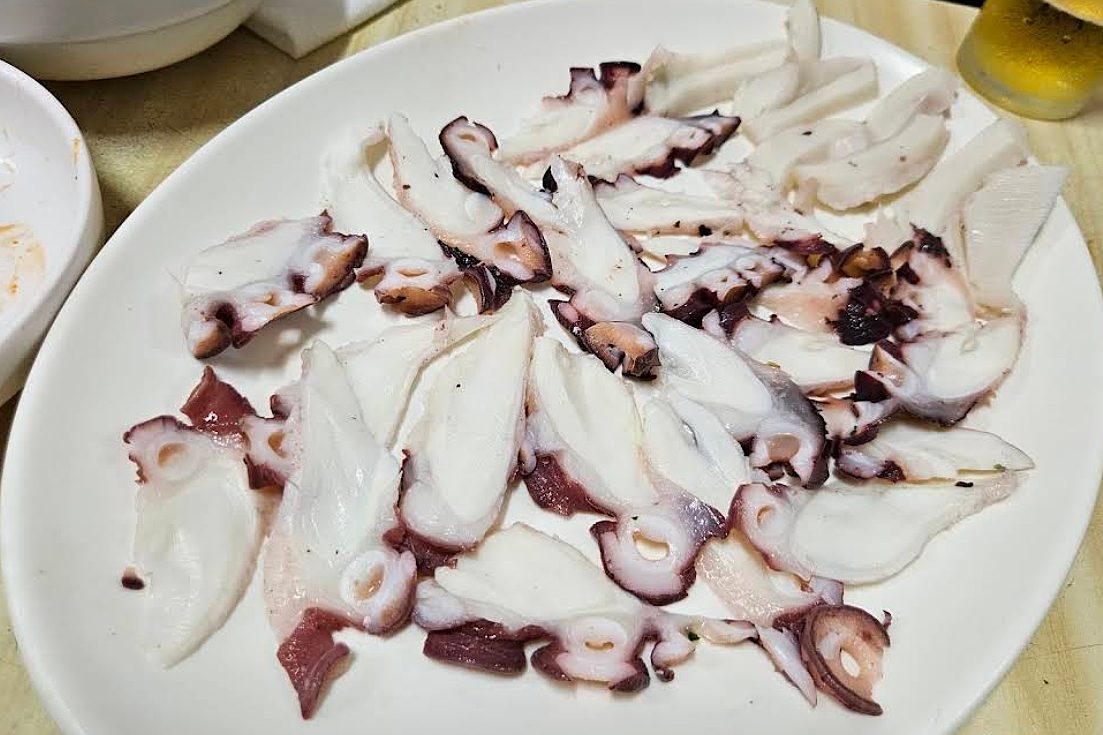
| Mun-eo Sukhoe (Boiled Octopus) | 문어숙회 | 32,000 | Features the texture and flavor of East Sea giant octopus, prepared with their own secret recipe. |
| Lunch Mul-hoe-bap (Cold Raw Fish Soup with Rice) | 점심 물회밥 | 14,000 | A refreshing cold soup with raw fish and rice, available during lunchtime. |
| Lunch Hoe-deopbap (Raw Fish Rice Bowl) | 점심 회덮밥 | 10,000 | A simple, hearty raw fish and rice bowl, available during lunchtime. |
Looking at the menu, we can clearly see the dedication to East Sea cuisine.
The price range for the main dishes generally falls in the mid-20,000 KRW range, which, considering the generous portions (‘yang-do pumeu-ham’) and quality ingredients like fresh flatfish and herring, is noted to offer good value for money (‘gasungbi’).
This excellent value is another reason for the restaurant’s enduring popularity and long queues.
Specialties Beyond Makhoe
For those who visit during the colder months, or simply prefer something different, the Gwamegi is highly recommended as a seasonal delicacy (‘byeol-mi’).
Traditionally a winter dish, the restaurant has ingeniously ensured its availability throughout the year.
They achieve this by utilizing vacuum preservation, allowing customers to enjoy this dried Pacific saury or herring dish anytime they visit.
Another popular choice is the Mun-eo Sukhoe (Boiled Octopus).
The preparation of this dish is a point of pride for the restaurant, as they use a special, secret recipe (‘bi-beop’).
This recipe is designed to perfectly capture the satisfying texture and rich flavor (‘pung-mi’) of the East Sea giant octopus (‘dae-wang mun-eo’).
The result is a tender yet firm boiled octopus that is a fantastic complement to the raw fish offerings.
This restaurant is a genuine local hotspot, and its popularity translates directly into wait times.
It is well-known for having a queue (‘waiting line’) even in the middle of the day (‘dae-nat-bu-teo’).
The popularity is so immense that once you’ve tasted the food, you will immediately understand why people are willing to wait.
Plan your visit accordingly, perhaps aiming for slightly off-peak times or being prepared for a short wait to experience this true ‘line-up-worthy’ favorite.
Beyond the main items, don’t overlook the simple yet popular complimentary dishes offered.
The basic side dishes, or *Banchan*, are also highly regarded.
Diners particularly enjoy the refreshing bean sprout soup (‘kongnamul-guk’) and the flavorful stir-fried anchovies (‘myeolchi-bokkeum’), which provide a homey, comforting balance to the seafood.
These simple but popular staples round out the meal and confirm the restaurant’s dedication to a fully satisfying dining experience.

To ensure your visit is smooth and enjoyable, here is all the essential logistical information you need for Yeong-deok Dining Restaurant.
The restaurant is conveniently located and easily accessible via public transport, although it is situated a little off the main street.
Remember, finding this spot is part of the charm of discovering a true local gem, tucked away in the vibrant Chungmuro neighborhood.
Postal Code: 04558
Neighborhood: Chungmuro Back Alley
Restaurant Type: Restaurant
Price Range: Mid-20,000 KRW (2만원대)
Saturdays: 12:00 PM ~ 4:50 PM (16:50)
Public Holidays
(Please verify if a public holiday falls on a Saturday, as hours may be affected.)
Transportation and Map
The easiest way to reach the restaurant is via the Seoul Metropolitan Subway system.
You should take Subway Line 3 or Line 4 to Chungmuro Station.
Once you arrive at the station, use Exit 8.
The restaurant is located approximately 316 meters from the exit.
VI. Final Thoughts: Embracing the Authentic Seoul Nopo Experience
Visiting Yeong-deok Dining Restaurant is more than just eating a meal; it’s an opportunity to immerse yourself in the authentic, working-class culinary history of Seoul.
This 37-year-old ‘Nopo’ provides a window into the past, offering a consistent, high-quality dish that has earned its place as the original Seoul-style *Makhoe*.
The combination of the crunchy Mijuguri, the fragrant mugwort, and the addictively sweet-and-sour “Magic Chojang” creates a flavor that you simply won’t find replicated anywhere else with the same level of authenticity.
The fact that they maintain their popularity, drawing lines of dedicated food lovers even during the daytime, is the most powerful testament to their quality.
Key Takeaways: Why You Must Visit
- Authentic History: Experience the 37-year-old original Seoul-style Makhoe.
- Unique Texture: Savor the crunchy (‘odok-odok’) Mijuguri, a rare and delightful experience.
- The Hoe-deopbap Finish: Don’t skip the ritual of adding rice to the leftovers for a handmade, soulful raw fish rice bowl.
- Exceptional Value: The portions are generous and the mid-20,000 KRW price range is noted for being excellent value for money.
Whether you choose to enjoy the Makhoe ‘Bu-meok’ (mixed) or ‘Jjik-meok’ (dipped), or even wrapped in *gim*, you are in for a treat.
And remember the lunch specials—the *Mul-hoe-bap* and the *Hoe-deopbap*—offer a fantastic way to enjoy their seafood expertise during the day.
Just be sure to check the operating hours, particularly the early closing time on Saturdays and the full closure on Sundays and public holidays, to avoid disappointment.
I truly hope this guide encourages you to take the plunge and seek out this legendary spot in Chungmuro.
It is a genuine slice of Seoul’s heart and soul, served on a plate.
Go and experience the original taste for yourself!
Happy dining! 🐟