The Soul-Soothing Power of Saengtaetang: An Introduction to Sokcho Saengtaejip
There are certain dishes that transcend mere flavor; they are experiences, deeply rooted in history and human connection.
For me, one such dish in Seoul is Saengtaetang, or Fresh Pollack Stew, and no place serves it quite like Sokcho Saengtaejip.
This isn’t just a restaurant; it’s a living testament to culinary dedication, a bustling Nopo (an old, long-established business) that has fueled the city’s workers for over two decades.
The moment you step near this place in Bukchang-dong, you can sense the energy—the delicious promise of a meal that will warm you from the inside out.
I recall my first visit during a particularly cold winter day.
The queue was already long, a clear sign of the treasure that awaited inside.
The restaurant’s fame rests on a broth that is simultaneously spicy (Kal-kal) and refreshing (Sihwon), a complex flavor profile that banishes fatigue and clears the mind.
But beyond the famous stew, Sokcho Saengtaejip offers an authentic taste of the East Sea, specializing in an array of natural sashimi and hearty fish stews.
If you’re looking for a genuine, no-frills Korean dining adventure near City Hall, you’ve found your next destination.
The Anatomy of a Perfect Saengtaetang: Freshness, Broth, and Minari
To truly appreciate Sokcho Saengtaejip, you need to understand the craftsmanship behind their main event: the Saengtaetang.
The dish is a masterclass in balance, built on a foundation of pristine ingredients and decades of cooking experience.
The key components—the pollack, the innards, the broth, and the vegetables—all play a critical role, creating a symphony of flavors that is legendary among Seoul’s gourmands.
It’s the kind of dish that makes you feel instantly better, especially on a rainy or cold day when comfort food is a non-negotiable necessity.
The Pollack (Saengtae): The fish is incredibly tender, described as ‘soft and melting in the mouth’. Its white flesh is delicate and absorbs the rich flavors of the broth beautifully.
The Innards: The stew is generously filled with the pollack’s internal organs—roe (al), milt (iri), and liver (ae).
These components add a profound richness and a ‘deep savory richness’ that elevates the soup from simple fish stew to an ultimate gourmet experience.
The Broth Base: The restaurant uses only natural seasoning, creating the umami flavor (Gamchil-mat) with kelp (dashima) and dried pollack powder (hwangtae garu).
This natural approach is what results in the signature clean, clear, and refreshing finish.
The Two-Step Saengtaetang Tasting Ritual
According to the locals, there’s a proper way to enjoy this masterpiece, a small ritual that maximizes the experience:
-
First Step: The Minari Starter. Before diving into the fish, one must first take a bite of the fragrant minari (water parsley).
The herb has soaked up the initial flavors of the clean broth and offers an appealing crispy texture and aroma, perfectly whetting your appetite for the main components. -
Second Step: The Ultimate Stew Experience. After the appetizer, move on to the fish.
Here, you taste the delicate flesh, the chewy roe, the creamy milt, and the rich liver, each component delivering a unique flavor that contributes to the “ultimate broth taste.”
The generosity of Sokcho Saengtaejip is personified by its long-time owners, the couple Yang Hyun-nam and Kim Jeong-ae, who have been serving this stew in Bukchang-dong for 23 years.
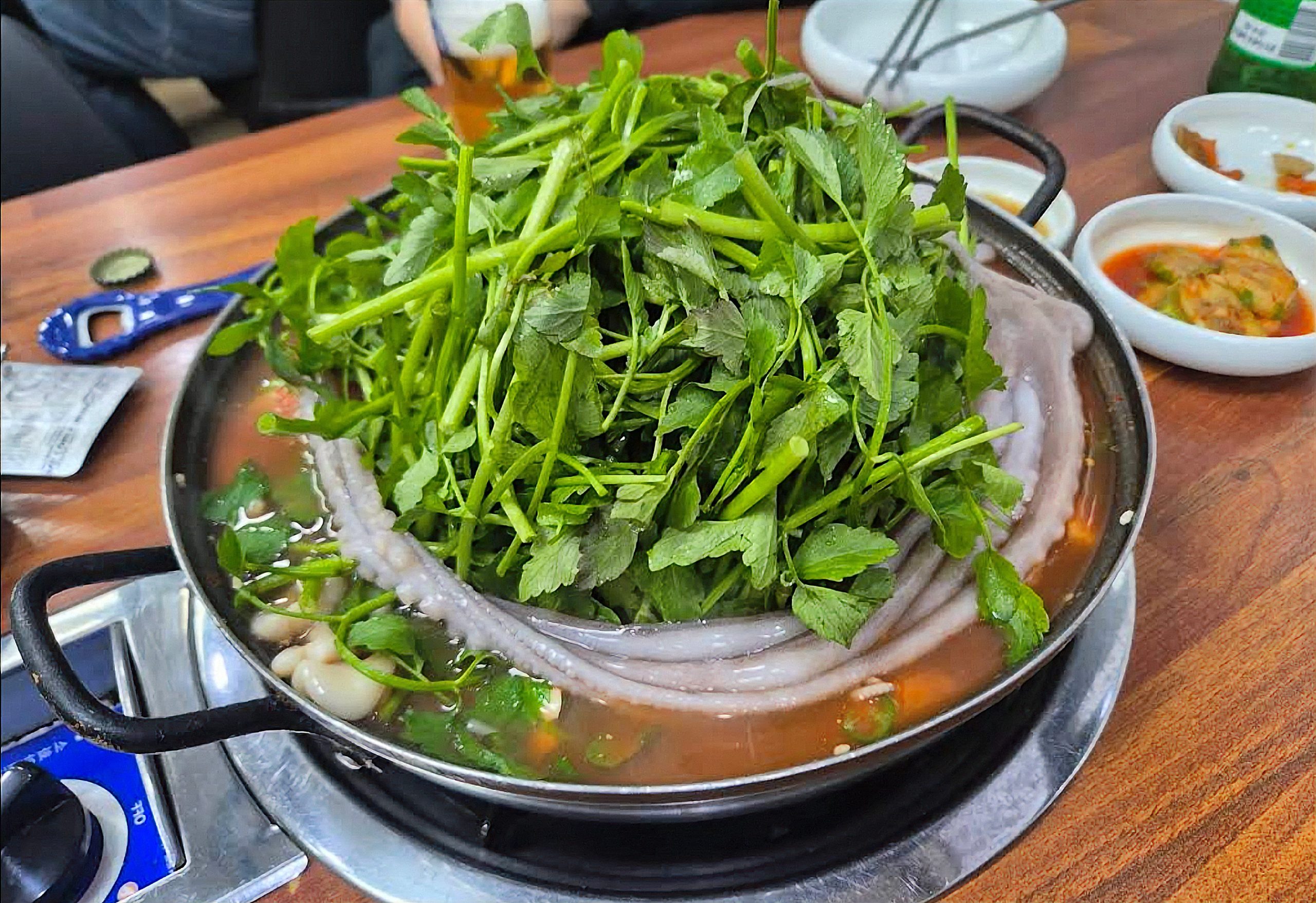
An interesting anecdote tells of how they started to pile the minari so high: it was a direct response to frequent customer requests for refills.
Instead of giving small amounts, they began serving what is essentially a “mountain-high” stack of minari, ensuring every customer gets a full, satisfying experience without asking twice.
This small gesture speaks volumes about their commitment to customer satisfaction and the abundance of their portions.

Beyond Saengtaetang: Exploring the Extensive Seafood Menu
While the Saengtaetang holds the crown, Sokcho Saengtaejip is fundamentally a specialist in fresh seafood.
The menu cleverly caters to different times of the day, offering separate specialties for the quick lunch crowd and the leisurely dinner parties.
This split focus allows them to maintain the highest quality for both their signature stew and their diverse sashimi offerings.
Let’s take a look at what the evening and non-pollack menu holds in store for the adventurous diner.
The Dinner Focus: Natural Sashimi and Hearty Seafood Strews
The vibe completely changes in the evening, as the focus shifts to a wide array of natural (Jayeonsan) sashimi and intense seafood Maeuntang (Spicy Stews).
This is where the restaurant truly showcases its commitment to the East Sea’s bounty, offering fish and seafood varieties rarely found in typical city restaurants.
The fresh, high-quality catch guarantees a superior taste experience that is well worth the premium.
Whether you prefer delicate raw fish or a simmering, robust stew, the evening menu has something genuinely special.
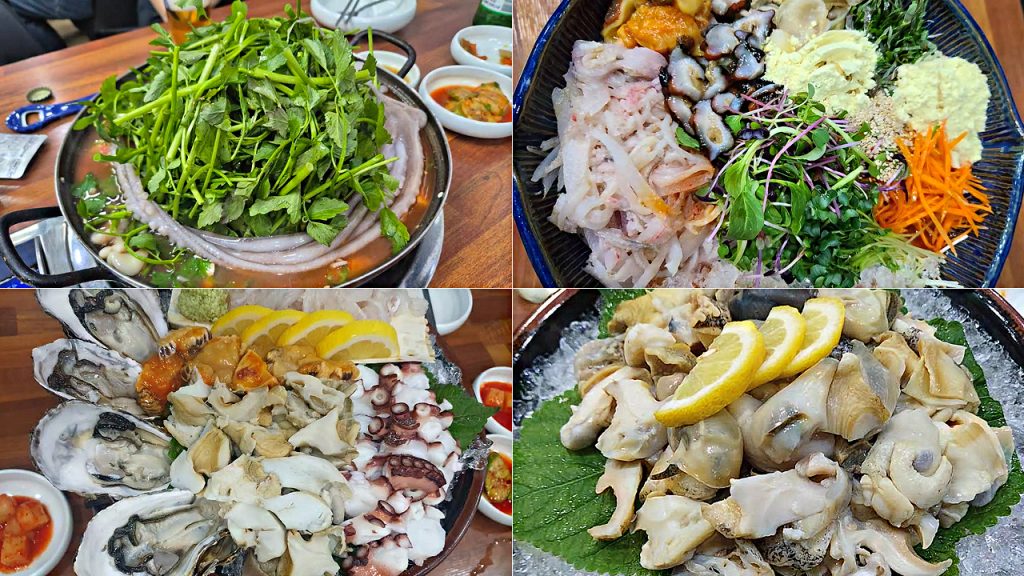
- Sashimi Highlights: Imyeonsueo Hoe (Atka Mackerel Sashimi), Gaetsangeo Hoe (Sea Shark Sashimi), Gajami Hoe (Flounder/Sole Sashimi), Borisaewu Hoe (Shrimp Sashimi).
- Signature Raw Fish Dishes: Cheonghoe Muchim (Herring Salad – spicy and sweet), Gajaemi Muchim (Flounder Salad), Cham Golbaengi Muchim Jayeonsan (Natural Sea Snail Salad).
- Unique Seafood Stews: Mulgom (Fatty Codfish) Tang, Dochi (Spotted Flounder) Tang, Samsuk-i (Small Toadfish) Tang. These unique, regional fish stews offer a deep, rich flavor different from the Saengtaetang.
- Special Seasonal Dishes: Doroomuk Jorim/Tang (Sandfish Braised or Stew), Saeng Daegu (Fresh Codfish) in various sizes.
The Refreshing Taste of Mulhoe (Watery Raw Fish Soup)
For those who prefer a cold, refreshing seafood experience, the Mulhoe is a popular choice, particularly the Modum Mulhoe (Assorted Watery Raw Fish Soup).
This dish is a perfect harmony of fresh, crisp seafood and a spicy-sweet (Maecom-dalcom) seasoning that hits all the right notes.
It’s described as delivering a ‘rich and generous flavor’ thanks to the various ingredients used in the assorted version.
It’s an ideal choice for a hot summer day, offering a chilling, tangy kick that immediately revitalizes you.
Sokcho Saengtaejip Menu & Pricing Guide (KRW)
| Category | Menu Item | Price (KRW) |
|---|---|---|
| Signature Stew | Fresh Pollack Stew (Saengtae) – Small | 43,000 |
| Stew (Tang) | Gomchi (Mulgom) Soup | 29,000 |
| Stew (Tang) | Aldochi-tang (Spotted Flounder Roe Stew) | 50,000 |
| Assortments | Modum Mulhoe (Assorted Watery Raw Fish Soup) – Large | 65,000 |
| Sashimi | Modum Sashimi (Assorted Sashimi) | 65,000 |
| Seafood Salad | Natural Cham Golbaengi Muchim (Sea Snail Salad) | 55,000 |

Interactive Budget Planner: Saengtaetang Cost Estimator
Planning a lunch with colleagues? Use this simple calculator to estimate the cost of your Saengtaetang order based on the number of people in your group.
Remember, the stew is served in three sizes: Small, Medium, and Large, and sharing is recommended.
Saengtaetang Order Calculator 💰
Saengtaetang Prices (KRW): Small (43,000), Medium (58,000), Large (65,000).
Estimate a reasonable portion size for your group based on these prices.
Recommended Order Size:
Estimated Minimum Cost (KRW):
The Sokcho Saengtaejip Experience: Nopo Charm and Necessary Caution
Visiting Sokcho Saengtaejip is a step back in time.
The establishment proudly maintains the appearance of a ‘Jeonhyeongjeok Nopo’ (a typical, traditional old restaurant).
This classic, time-worn atmosphere is part of its undeniable charm, but it also comes with a few specific expectations you should be prepared for.
This section covers the practical aspects of dining, from the inevitable crowds to a critical note on the environment.
It is important to acknowledge a recurring comment regarding the restaurant’s environment: “It is not perfectly clean.”
While the deliciousness of the food often earns it the title of ‘The Best Saengtaejip,’ the general consensus suggests that the hygiene could be improved, even considering its status as a Nopo.
If you are highly sensitive to restaurant hygiene, you might want to take this factor into consideration.
However, for those who prioritize the unparalleled taste and generous portions, the establishment comes highly recommended.
During peak lunch hours, there is almost always a line (a mandatory ‘waiting’ period).
This is a strong indicator of its popularity among local office workers.
Plan your visit accordingly, perhaps aiming for slightly off-peak times if you are on a tight schedule.
Hours of Operation and Location Details
- Operating Days: Monday to Saturday.
- Hours (Mon-Fri): 10:30 AM to 9:00 PM (21:00).
- Hours (Saturday): 10:30 AM to 8:00 PM (20:00).
- Closed Days: Every Sunday and National Holidays (Seollal/Chuseok).
- Contact Number: 0507-1404-8944
- Address: 04526 Seoul, Jung-gu, Namdaemun-ro 25-17 (Bukchang-dong).
Getting There: Convenient Location near City Hall Station
Sokcho Saengtaejip boasts an extremely accessible location in the heart of Seoul.
It’s situated near the busy Seoul City Hall area, making it an easy lunch or dinner spot for both office workers and tourists.

Visual Summary: Key Takeaways Before You Go
Cold/Rainy Days, Hangover Cures (Sok-pul-i), and Authentic Korean Nopo Experience.
Kal-kal (Spicy) & Sihwon (Refreshing) Broth, with the creamy richness of pollack innards (milt/roe).
Lunchtime sees significant waiting lines. Dinner focuses on Natural Sashimi and specialty stews.
Final Summary: Why Sokcho Saengtaejip is a Must-Visit
To recap, Sokcho Saengtaejip is much more than a simple restaurant; it is a vital part of Seoul’s culinary landscape, a true Nopo that has perfected its craft over 23 years.
The core appeal lies in the quality and depth of its signature Saengtaetang—a dish defined by its clear, flavorful broth and the generous inclusion of fresh pollack and its savory components.
While it retains the rustic, no-frills character of an old establishment, resulting in a slightly less pristine environment, the overwhelming consensus is that the culinary excellence far outweighs any minor inconvenience.
For those seeking an authentic taste of Korean comfort food or fresh, natural East Sea sashimi, this spot near City Hall is an essential pilgrimage.
So, next time you find yourself near City Hall, feeling the chill of the weather or simply craving a dish with real character, I wholeheartedly recommend joining the queue at Sokcho Saengtaejip.
It’s a taste of history, a labor of love from the Yang and Kim couple, and simply the best Saengtaetang you’re likely to find in the capital.
Go, enjoy the warmth, savor the broth, and let the mountain of minari transport you straight to the East Sea coast. Happy eating! 😊
Disclaimer: Prices and hours are based on information available as of the article creation date and are subject to change by the restaurant without notice. Always check their operating status before visiting.